
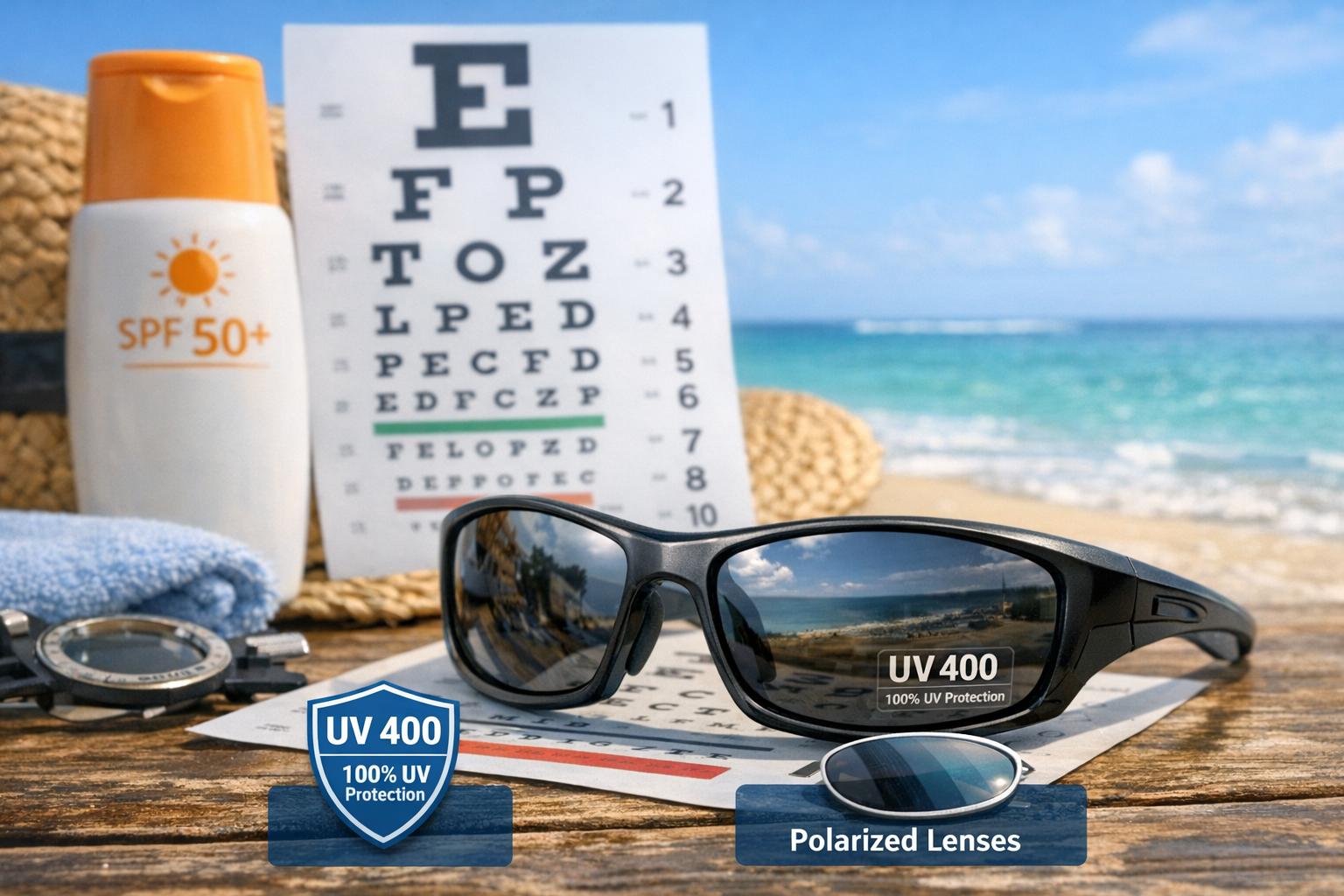
Understanding UV Protection
Selecting sunglasses appropriately is essential to safeguard eye health, particularly in environments where exposure to sunlight is significant. The quintessential role of sunglasses is to protect the eyes from the detrimental effects of ultraviolet (UV) rays. **UVA** and **UVB** rays, when left unchecked, can lead to numerous ocular health issues. Hence, it is recommended to opt for sunglasses that block 99% to 100% of both UVA and UVB rays, a metric often indicated by labels such as *UV400 protection*. This designation verifies that the sunglasses block all light rays with wavelengths reaching up to 400 nanometers, effectively covering the complete UVA and UVB spectrum.
Lens Material
The material used in the production of lenses can significantly affect the degree and reliability of eye protection offered by sunglasses. Common lens materials include plastic, polycarbonate, and glass, each presenting specific benefits and drawbacks concerning weight, clarity, and resistance to impact.
Plastic lenses are typically more affordable and lightweight, making them a popular choice for casual use. However, they might not offer the same level of impact resistance as other materials. On the other hand, polycarbonate lenses are celebrated for their combination of lightweight properties and high impact resistance, rendering them particularly suitable for individuals engaged in sports or active outdoor activities. Polycarbonate lenses are also shatterproof, providing additional safety. Glass lenses, while delivering superior visual clarity and scratch resistance, are heavier and can break under impact, making them less ideal for high-impact activities. Irrespective of the material you select, ensuring that the lenses provide complete UV protection remains imperative.
Polarization and Tint
Polarization is a feature distinct from UV protection. While it does not enhance UV protection, it effectively diminishes glare originating from reflective surfaces like water or roads. This reduction in glare can improve visual clarity and overall comfort, especially in scenarios such as driving or when one is in proximity to water bodies. It’s essential to acknowledge that *polarized lenses* do not inherently equate to UV protection; therefore, it is vital to confirm the presence of UV protection in polarized sunglasses.
Similarly, the tint on sunglasses lenses does not contribute to UV protection but can enhance comfort when exposed to intense sunlight. **Gray lenses** are considered color-neutral, meaning they preserve the true color of objects, making them suitable for general use. They neither distort vision nor change color balance. Conversely, **brown or amber lenses** can amplify contrast, which may be beneficial in specific lighting or environmental conditions such as overcast skies or forested areas.
Frame Size and Fit
The geometry and fit of the frame are crucial factors influencing the overall protection offered by sunglasses. Larger frames can offer more extensive coverage, shielding not only the eyes but also the sensitive skin that surrounds them. Ensuring that the sunglasses sit comfortably and securely on your face is important to avoid them slipping down your nose or falling off during activities. A well-fitted pair of sunglasses can maintain optimal protection and comfort.
Consideration of Standards and Recommendations
When choosing sunglasses, adherence to recognized international standards can enhance reliability and trust in your selection. For instance, sunglasses bearing the *CE mark* comply with European safety standards, indicating tested and verified efficacy in UV protection. Similarly, other regions might have specific certification marks that denote compliance with recognized safety and quality standards.
Researching thoroughly and possibly consulting professional resources can assist in making an informed decision. For those seeking comprehensive guidance on selecting the best sunglasses, resources such as the Mayo Clinic’s guide on sunglasses provide valuable and detailed advice. Utilizing such credible resources ensures that your choice of eyewear aligns not only with personal preferences but also with advised health and safety standards.
In summary, the selection of sunglasses should prioritize **UV protection** over stylistic preferences. It is crucial that lenses offer 99% to 100% protection from both UVA and UVB rays. This, combined with considerations of lens material, possible polarization benefits, appropriate tints, and a well-fitted frame, contributes to an optimal choice in maintaining eye health. Ensuring compliance with international quality and safety standards further adds to the confidence in your selection, thus allowing you to enjoy outdoor activities with peace of mind.
This article was last updated on: November 14, 2026