

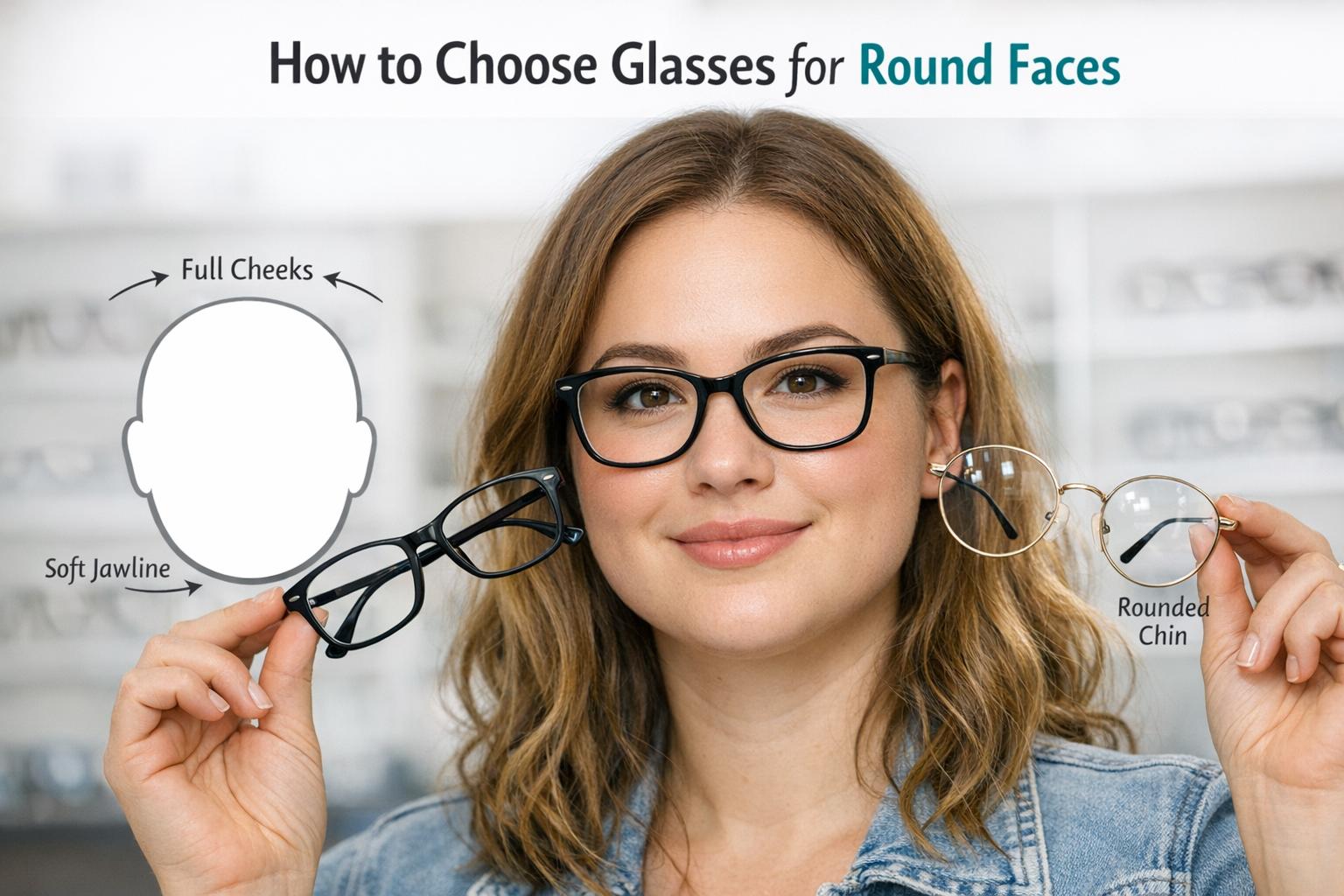
Understanding Face Shape
Choosing the right pair of glasses involves more than just liking the way they look on someone else or fitting the latest fashion trend. It’s about understanding how different styles can complement your unique face shape. When your face shape is round, characterized by its equal width and height and soft curves without any prominent angles, it becomes essential to choose frames that enhance your facial features harmoniously. Identifying these features in your face helps in selecting frames that complement your structural facial dynamics without overshadowing them.
Frame Shape and Size
The shape and size of the frame are critical components in choosing glasses for a round face, as they can significantly alter the perception of your face’s dimensions.
Angular Frames: For a round face, one effective strategy is opting for frames with sharp, angular lines. These frames provide a contrast to the smooth, rounded features of your face, creating balance. Angular frames, such as rectangular and square shapes, offer a structured look, elongating the face visually. The geometry of these frames introduces a different dimension that complements the innate roundness by adding noticeable definition.
Oversized Glasses: Oversized glasses are another strategic choice for those with round faces. By covering a larger area of the face, these frames can reduce the appearance of width, offering the illusion of a slimmer and more elongated face. While opting for larger frames, ensure that they do not overwhelm your facial features, maintaining a balance between frame size and facial proportions.
High-Set Temples: Frames equipped with high-set temples are advantageous in creating an impression of length. High-set temples draw focus upwards and thus can help elongate the overall appearance of your face, making for an aesthetically pleasing, harmonized look when viewed from different angles.
Frame Material and Color
Once the ideal frame shape and size are identified, attention should then shift to the frame’s material and color as these factors play a crucial role in enhancing the overall look of the glasses.
Material: When considering material, thin and lightweight materials such as metal or acetate are optimal for round faces. These materials contribute to a more refined and less bulky appearance. Their minimalistic nature generally helps in maintaining proportionate aesthetics, ensuring that the glasses accentuate rather than overpower your facial features.
Color: The choice of color is just as important as the choice of material. For a harmonious complement to the subtler features of a round face, dark or bold colors can provide the necessary contrast and emphasis. Colors like black, navy, or deep brown are particularly effective, as they enhance the angular aspects of the frames, adding definition that supports the contrast with rounded facial contours.
Consider the Bridge and Lenses
Besides the primary aspects of frame shape, size, material, and color, consideration must also be given to the bridge of the glasses and the lenses themselves.
Wide Bridge: Selecting a frame with a wide bridge is beneficial for those aiming to create an impression of a longer, more proportionate face. By spacing the eyes slightly further apart, a wide bridge can contribute to the illusion of a lengthened face, adding another layer of perceived dimension.
Lens Shape: The shape of the lenses within the frames should be another consideration. Round lenses should typically be avoided as they can often replicate the natural curves of the face, downplaying any contrast. Instead, lenses with oval or rectangular shapes help enhance the desired angularity, reinforcing the balance intended by the choice of frame style and materials.
Professional Guidance and Trying on Glasses
To ensure a fully informed selection process, seeking professional guidance is advisable. Consulting with a professional optician can vastly improve the results, offering expert advice tailored to individual needs. They can take into account not only face shape but also other factors like personal style, color preference, and any specific vision requirements.
Moreover, trying on different styles is an important part of the selection procedure. Whether in a store or by using virtual try-on technologies available with many retail platforms, experimenting with various styles can help identify what not only fits best but also what feels most comfortable and what suits your personal style. These tools provide an opportunity to visualize how different frames can alter facial appearance and allow for confident decision-making.
For additional guidance on selecting the most suitable glasses, you can find helpful resources [here](#).
This article was last updated on: April 17, 2026