
Understanding Face Shapes
When selecting glasses for wider faces, it’s essential to begin by understanding the characteristics of wide face shapes. Typically, these faces have broad cheekbones and a wide forehead, with the jawline being less pronounced. Recognizing these features will help in the selection of frames that complement rather than emphasize the face’s width.
Frame Shapes and Styles
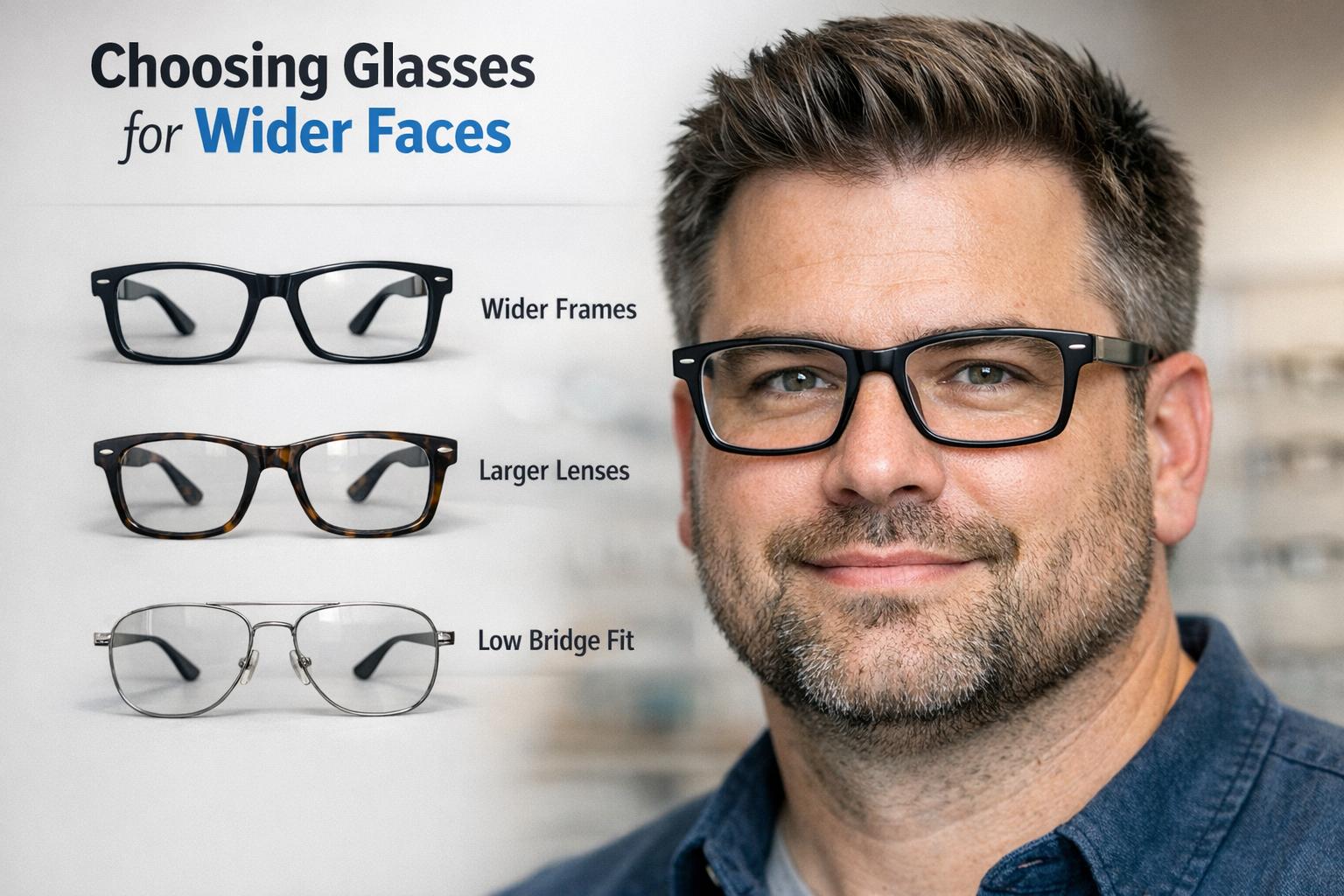
For those with wider faces, certain frame styles work better than others. Opt for frames that add length or balance to the face’s proportions. Rectangular, square, and aviator styles are often more suitable as they contrast with the natural roundness or wideness of the face. It’s important to select frames with a slight horizontal orientation, which can elongate the face’s appearance.
Proportion and Size
Choosing the right size of frames is crucial. Frames that are too narrow can create an unbalanced look and may feel uncomfortable. It’s advisable to look for frames that are slightly wider than the broadest part of the face. This not only ensures comfort but also provides a balanced aesthetic. The bridge width should also be considered to prevent undue pressure on the nose.
Material and Color
Material and color play a significant role in selecting the perfect glasses. Lightweight materials such as titanium or durable plastics can enhance comfort, especially for larger frames. When it comes to color, neutral or darker hues are preferable as they can add depth and contrast to wider faces, minimizing emphasis on the face’s width.
Trying Before Buying
Where possible, it’s beneficial to try on multiple frame styles and shapes. This allows for an assessment of not only the aesthetic but also the comfort and fit. Many optical retailers offer virtual try-on tools that can provide a preliminary look at how different frames might appear on one’s face. Additionally, personalized advice from an optician can be invaluable.
Facial Feature Considerations
When selecting frames, understanding the variations within face shapes is necessary. A wide face might possess subtle distinctions that could change how a given frame looks. Some faces might have broader cheeks, while others may feature more prominence at the forehead or jaw. Consideration of these features allows for finding glasses that not only fit well but also enhance one’s natural features.
Impact of Frame Design
Frames can influence the perception of facial features. While round frames might soften angular lines and play around with proportions, rectangular designs or those with strong lines can add definition. When selecting frames, consider how angular lines might introduce balance against the rounded contours of a wide face, potentially offering a slimming effect.
Bridge and Temples
Equally essential is the careful attention to the design of the bridge and temples of the glasses. A well-designed bridge can distribute the weight of the glasses evenly, ensuring they sit comfortably and securely on the face. Adjustable nose pads or a molded bridge could enhance comfort further. Similarly, the right temples, which should neither be too tight nor too loose, play a crucial role in striking a balance between comfort and aesthetic appeal.
Lens Selection
While the frame design is important, the selection of lenses should not be overlooked. Lenses can significantly influence how the glasses look and feel. Factors such as lens thickness, coatings for glare reduction, and lightweight lenses can affect the overall experience of wearing glasses. Choosing lenses tailored to specific visual needs further enhances the functionality of eyewear.
Other Aesthetic Considerations
It is important to consider how one’s hairstyle or personal attire might impact the choice of eyewear. Glasses are a part of personal style, and their interaction with hair and clothing should be harmonious. For instance, certain frame colors may pair well with specific clothing choices, providing coherence to a person’s overall look.
Versatility
A versatile pair of glasses offer the flexibility to adapt to various settings, from professional environments to casual outings. Opt for frames that suit most occasions, yet remain realistic about how specialized frames for sports or other activities might also be needed. Such considerations ensure that one’s eyewear not only serves a functional purpose but also aligns with personal style across different contexts.
Maintenance and Care
To maintain glasses in optimal condition, regular cleaning and proper storage are imperative. Using a special microfiber cloth and cleaning solutions recommended by opticians helps avoid scratches and maintain clarity of vision. Proper storage, such as in a hard case when not in use, protects the glasses from accidental damage, ensuring their longevity.
Consultation and Expert Advice
While personal preference plays a significant part in selecting the perfect glasses, seeking expert advice remains invaluable. Trained opticians can provide insights based on years of experience, helping align functionality with personal style. They can offer suggestions that might not have been considered, ensuring that the final selection provides both comfort and aesthetic satisfaction.
If any doubts persist about the selection of frames that suit different face shapes, it is advisable to delve into resources provided by optical retailers or engage with eyewear specialists. Often, these resources cater to a diverse array of optical needs, providing comprehensive guides and visual examples to aid in making an informed choice.
This article was last updated on: May 15, 2026