Understanding the Basics of Glasses Adjustment
When your glasses don’t fit properly, it’s more than just a nuisance. In addition to causing discomfort, poorly fitting glasses can impair your vision. Fortunately, many small adjustments can be made at home to resolve these issues, avoiding the need for professional help. However, it is essential to recognize when the expertise of an optician is necessary, especially for significant adjustments or complex repairs. Understanding the fundamental techniques of glasses adjustment can help maintain both comfort and functionality.
Identifying the Problem
The first step in adjusting your glasses is to carefully identify the specific issue causing discomfort or impacting your vision. Each part of the glasses has a potential problem that could be affecting the fit. For instance, you might find that your glasses are slipping down your nose constantly, creating an uncomfortable and consistent need to push them back up. Alternatively, they may be pinching the area behind your ears, leading to soreness. Another common problem is that the glasses feel too loose overall, affecting the security with which they sit on your face. By taking the time to clearly identify the problem, you can make more targeted and effective adjustments.
Adjusting the Nose Pads
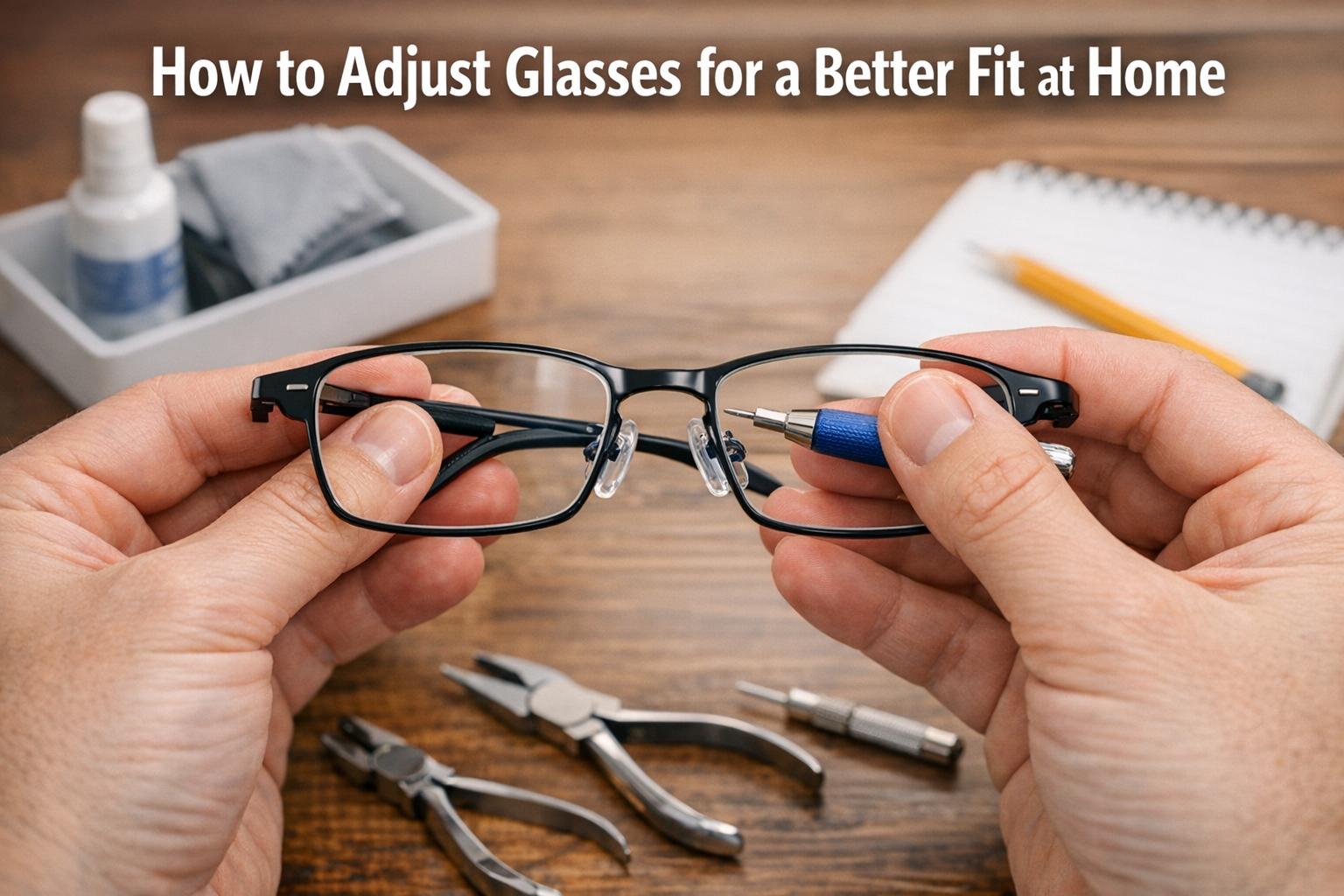
Nose pads are an integral part of the glasses’ structure, influencing comfort and fit. They are small components located on the inside of the frame that sit on the bridge of your nose. When glasses frequently slip, it often indicates a need to adjust these nose pads for a tighter or looser fit. For frames made of metal, these pads are usually adjustable:
1. Secure the frame by holding it steady with one hand.
2. With the other hand, use your fingertips to gently push the nose pads closer together if you require a tighter fit. If the nose pads are causing discomfort by pinching, you can adjust them further apart.
It is essential to apply gentle pressure to avoid damaging the frames or the pads themselves.
Adjusting the Temple Arms
The temple arms, also known as the temples or sides, play a crucial role in how well your glasses stay on your face. Adjustments to the temple arms can address both tightness and looseness:
Bending the Metal: If your glasses have metal frames, use your hands to gently bend the temple arms. This bending will allow you to achieve the desired degree of snugness behind the ears. If the arms are too loose and the glasses do not stay securely in place, consider bending the arms slightly inward. Conversely, if there is some pressure or pinching, the arms may need to be bent outward.
Heating the Plastic: When dealing with plastic frames, the process differs since bending cold plastic can cause breakage. The temple arms need to be heated first, making the material pliable. Hold them under warm water or use a hairdryer on low heat for about 30 seconds. Once warmed, cautiously adjust the arms. Take care not to overheat or exert too much force, which could result in damage.
Adjusting the Frame Front
Sometimes, glasses may appear or feel crooked when worn. This misalignment can be rectified through adjustments to the frame front:
– Begin by placing your glasses upside down on a flat surface. This position helps you identify discrepancies in height or curvature.
– Once you determine which side is higher or does not rest flat, gently bend the frame in that direction until both sides are level.
By leveling the frame front, you can ensure a balanced and comfortable fit.
Tightening Loose Screws
At times, your glasses may feel loose or unstable due to loose screws in the hinges:
– Utilize a small eyeglass screwdriver to tighten any loose screws you find. This step is vital as it secures the various components of the glasses together.
– Exercise caution not to overtighten the screws, which might strip the threads or result in frame damage.
Regularly checking and tightening loose screws is a preventive measure that can maintain the integrity of your glasses.
When to Consult a Professional
While you can perform minor adjustments yourself, some situations call for professional intervention. Significant alterations may require specialized tools or skills that only an optician possesses. Similarly, if you feel uncertain about making the adjustments or fear causing damage, it is advisable to seek expert assistance. When adjusted correctly, glasses not only provide improved vision but also enhance user comfort. For these reasons, consulting an optician is invaluable when in doubt.
In conclusion, understanding how to adjust your glasses can significantly enhance your comfort and vision quality. By being able to identify specific issues and applying appropriate adjustment techniques, you can manage minor repairs at home. However, recognizing when professional help is necessary ensures the longevity and optimal performance of your eyewear. For additional tips on taking care of your eyewear, feel free to explore more resources.
This article was last updated on: April 10, 2026